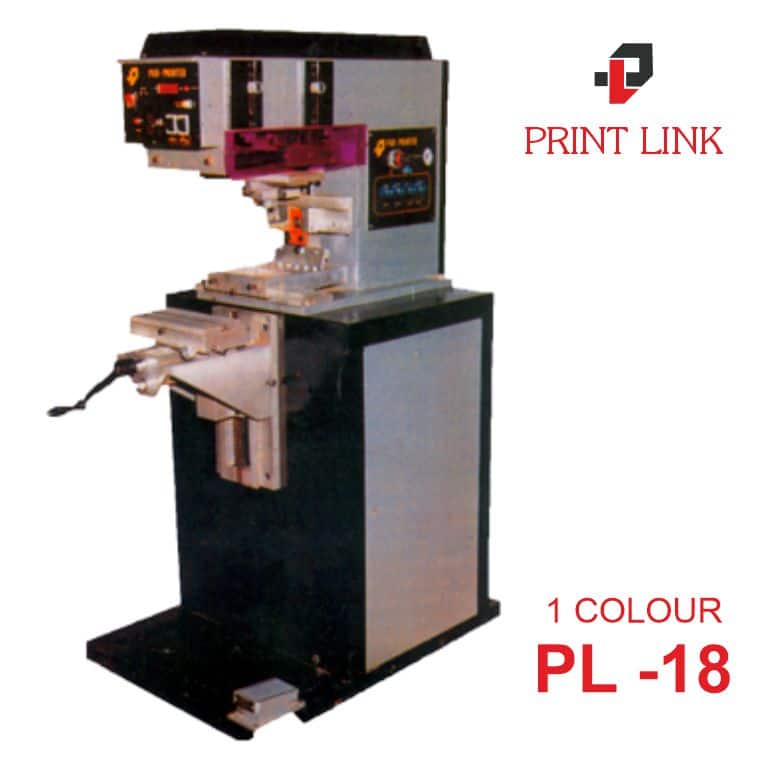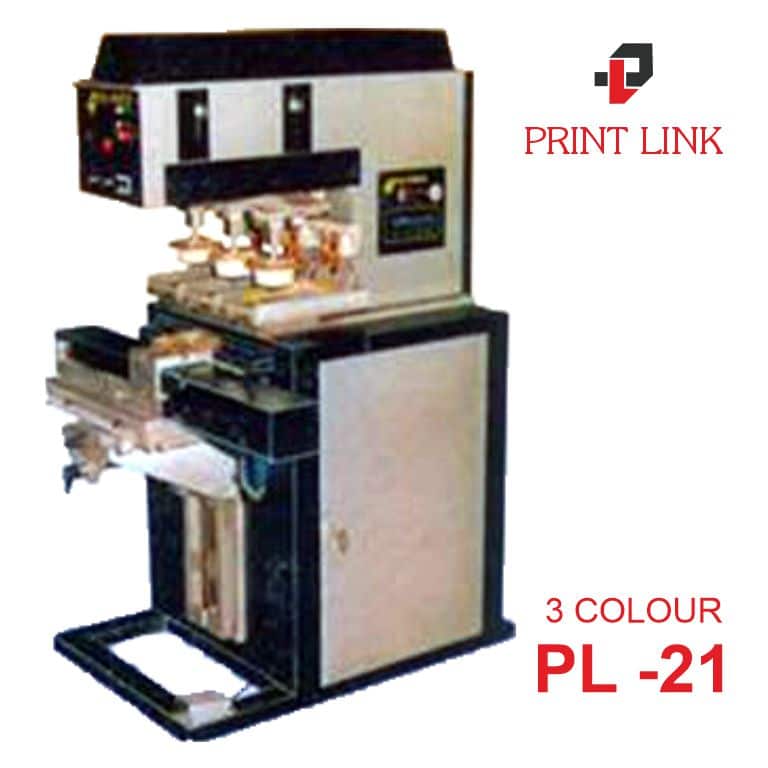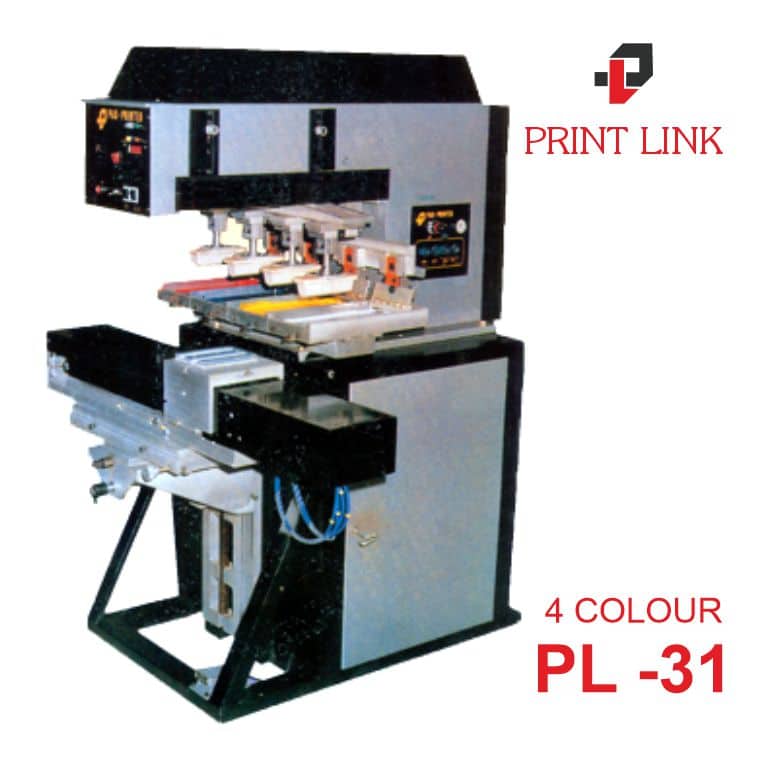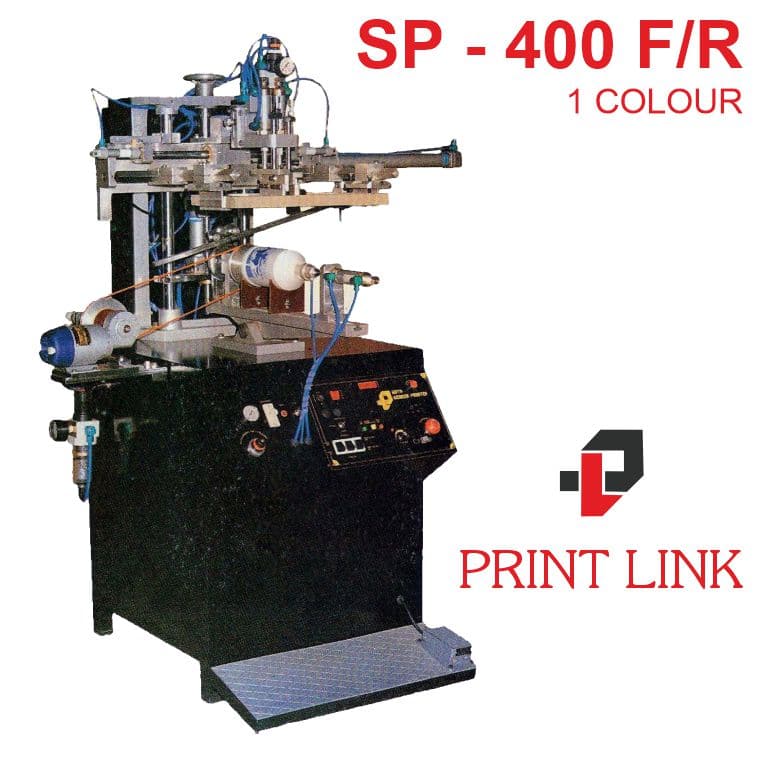
Selecting Pad Printing Machine

Pad Printing applications tend to fall into three main categories.

  • PRINTING
  • DECORATION
  • CODING

Quality requirements normally follow in the same order.

PRINTING is the precise application of ink onto a substrate, usually lettering, symbols, single and multicolour. Also four colour process.

DECORATION is generally the application of a design or effect that is to enhance the look of a product such as wood grain, asymmetrical designs single and multicolour.

CODING is for information only where the print has to be legible but not necessarily high quality. This is not to be confused with Bar Coding where print quality is very important particularly with regard to contrast and edge definition. Bar Coding is in the printing category.

This article is a guide through the different machine types available, their strengths and weaknesses.
VIDEOS ARE ALSO INCLUDED FOR EASY UNDERSTANDING

MANUALLY OPERATED MACHINES

 Selecting Pad Printing Machineimage shadow Selecting Pad Printing Machine

The first machines were manually operated. Very high quality watch and instrument dials have been printed over the years using hand powered machines. Now the only reason for buying them is the initial cost. They are not really entry level machines except where printing is carried out on a small scale. Print rates are very low and maintaining quality over a continuous run is extremely difficult. A well engineered unit can be useful for proofing plates, pads, inks and designs as an alternative to taking a production machine off line.

OPEN INKWELL MACHINES


There are many machines of this type out in the field as it was the original system designed in the late 1960′s early 1970′s that has been used as the basis of many clones. Original machines were mechanically operated giving little opportunity for adjustment of individual actions as the inking mechanism and pad horizontal action were tied together on the same drive. Adjusting the speed of the main drive motor controls the overall speed of the machine. Later more sophisticated mechanically driven machines gave greater flexibility of adjustment. This is a very robust system that is unaffected by fluctuations in air line pressure. It gives a smooth action and has been used extensively with larger machines working on long runs.
The concept has developed and a host of machines have been produced using electro pneumatics and even servo motor drives. PLC’s (Programmable Logic Controllers) can provide a wide range of sequencing options.
Whatever the degree of sophistication the control of ink conditions is problematic due to the large surface area exposed to atmosphere. This can be ameliorated in different ways. Some manufacturers help reduce evaporation by shrouding the inking mechanism and ink well and others by using ink pumps and solvent addition systems.
Changeover of ink and plate can be carried out relatively quickly by removing the ink tray containing the plate and replacing it by another that has already been prepared. Consideration regarding the cost of spare ink trays must be given, as they can be very expensive. The ink tray can be designed to catch ink that spills over the front of the plate, thus keeping the machine cleaner.

 Selecting Pad Printing Machineimage shadow Selecting Pad Printing Machine

CLOSED CUP OR SEALED CUP MACHINES

 Selecting Pad Printing Machineimage shadow Selecting Pad Printing Machine

This system is considered by some to be the panacea to all Pad Printing ills, would that it was so. What is surprising is that this “New development” has been around for many years. A Swiss manufacturer of Pad Printing machines for the watch dial industry had a system 35 years ago! Although pretty basic it performed very well indeed.
The concept is to contain the ink in a cup that is turned upside down and the ink sealed in by pressing the cup down onto the plate. The cup not only holds the ink but when traversed over the plate acts as a doctor blade and leaves ink just in the etched areas on the plate.
The obvious advantage of the system is that solvent evaporation is reduced to a minimum. This allows much closer control of ink conditions resulting in the opportunity for reduced down time and partial unmanned operation.
But, you say; “The machinery salesman told me it will run 24 hours 7 days a week 52 weeks a year.” Did he say what the print quality would be, how often do you have to top up with ink, how much will the plate wear, how long does the cup last, does the fact that certain ink corrode the plate matter, using two component inks is acceptable but don’t leave them for an extended period in the cup, with some systems it is better to keep the plates and cups as matched pairs. A question that must be asked is. “How much does a replacement cup cost”. The answer can come as a surprise. £500 is not at all unusual. Fortunately if the damage to the cup is very slight it is possible to carefully hone the contact surface on a fine carborundum stone. Some cups can be re-machined at a quarter of the replacement costs. This all means the cups must be handled very carefully. The plate has to be twice the size of a conventional plate for a given image.
The issue of ink condition is crucial. With closed cup systems it is easy to have the attitude out of sight out of mind. Ink mixing is just as important as when you use an open ink well system. The mechanism of pad printing remains the same, evaporation of solvents being the governing characteristic. Solvents must be weighed into the ink and the mix is dependent on the image being printed. For example when fine detail is being printed the mix of solvent will contain a higher percentage of retarder; otherwise the ink will dry in the etching on the plate.

The most common problem is brought on by the impression that inks have an indefinite pot life when held in the closed cup. This is simply not so. Time and again users who are unhappy with print quality contact me. The solution often is to mix a new batch of ink and take out the old and replace it with new. If print quality is critical it is recommended that the ink is replaced once a day. When high volumes of ink hungry images are being printed regular topping up of the ink will be necessary. As long as correctly mixed inks are added ink condition will be maintained. Addition of solvents whilst in production is fraught with problems as the ink volumes are very low and one squirt can completely upset the solvent balance. Old ink that you remove from the cup should be disposed of and not mixed back in to the new ink. If print quality is not important then ink condition can have a much greater latitude.
Ambient conditions can still effect the performance of an ink but not to the same extent as machines with open ink wells. Differing ambient conditions will mean you will have to adjust the initial mix of ink to control solvent evaporation on the pad and in the etched plate.
Another problem that can occur is that some ink systems when used form a crust of dried ink around the edge of the cup. This crust will drag lines of ink across the image and ruin the print. Ink manufacturers have developed inks that overcome this problem so if your current supplier cannot solve it consider another supplier.
With closed cup systems plates generally have to be twice the size of open ink well systems. If you have a lot of plates this can be a substantial cost increase. Ideally the surface finish of the plate needs to be better than when it is cleared with a conventional doctor blade. The doctoring characteristics of the cup depend on the contact surface, machined from solid, spring steel or ceramic. This is allied to the bearing and clamping mechanism. There is no such thing as a cheap system. The cheaper it is the more expensive it is to run.
At times like these I would love to be able to give you my recommendations as to which manufacturer had the best combination but I have to remain impartial. By the very nature of these cups plate wear can be a problem. With steel harder flatter plates will be more effective.
Photopolymer plates are best used with cups that have ceramic rings. These rings are very flat and run well on the photopolymer material. Different photopolymer materials will perform better or worse and you will need to experiment. Broadly the harder materials are better not just from a wear point of view but also as regards to print quality.
Multicolour machines are common place. The quality of engineering will determine the effectiveness of the system. Some manufacturers can offer either sealed ink cup or open inking mechanisms on the same basic machine. Later in this article I show the use of sealed ink cups in sophisticated CNC controlled equipment for multicolour printing.
As mentioned above ink cups have different constructions. The simplest is machined from solid metal. Normally hardened steel. The second type has a ribbon steel contact surface that can be replaced when worn. The third is a metal cup with a ceramic contact surface attached to the metal. This gives a very good life but is more expensive than the conventional cup.
To achieve maximum life out of any system minimum pressure must be applied and the cup should be mounted on a stable bearing. Any tendency for the cup to rock will cause uneven wear and a consequential film of ink on the plate, which is transferred by the pad. Some manufacturers rotate the cup during the machine cycle can overcome this. Some systems use internal magnets to hold the cup onto the plate this appears to work very well. Be careful that the pigments in the ink are not effected by magnetism, if so they collect around the magnets and they are virtually impossible to use.
There is no doubt that the system is being refined and the use of larger cups is increasing the print area. Four colour machines with ink cup diameters of 210 mm are now available along with six colour machines with 150 mm cups.
The use of the sealed ink system is becoming more important as the effects of legislation require a much reduced level of solvents in the working environment and expelled into the atmosphere.
Machines will either have cups that move backwards and forwards and the plate remains stationary or stationary cups and moving plates. The first system is normally used for larger images at slower speeds whereas the second is for higher speed printing of smaller images. There are exceptions.
Whether a closed cup or open ink trough is used the same systems can apply. The moving plate with a single plane pad movement provides a cost saving for the machine supplier because there is one less actuation on the machine. From the users point of view as the pad only has to move in the vertical plane there is less vibration on the pad and the machine can cycle faster. This system is used with high speed coding machines. Here a small plate is used with a sealed ink cup.
Larger machines with plate areas of 200 mm by 450 mm have been produced using this method but they need very substantial bearings to support the plate when it is in the pick up position as the loading exerted by a large pad is very considerable. Manufacturers claim as the pad strokes below the base of the machine there is a larger work area. The down side to this is that the machine has to be well guarded because of the back and forwards movement of the plate. Automatic loading can take advantage of the shorter cycle times.

ROTARY PAD PRINTING SYSTEMS

The development of rotary systems stems directly from gravure printing. It is very suitable for cylindrical parts and also for continuous flat printing.
A rotary drum type silicone pad is used in conjunction with a steel cylinder plate. The cylindrical plate has the design etched onto it, the ink flows onto the plate from an ink trough or ink ducts. A doctor blade removes the excess ink and as the cylinder rotates the silicone rubber printing roller picks the ink out of the etching and transfers it onto the item to be printed.
One of the advantages of this system is high speed printing. With small components such as caps and closures 120,000 parts per hour can be achieved. Printing a single item for example a 25 mm diameter cylinder around the periphery would run at 3000 per hour. Another advantage is the very fine detail that is printable. Ink deposits tend to be slightly less than in conventional pad printing particularly at the higher speeds that are attainable. The ink has to be run with high levels of solvent. Ink manufacturers recommended 20% solvent but I was using 30% on a multicolour application. Each colour may require a separate mix that must be determined at the start of a job and maintained throughout and on subsequent runs. Control of the solvent balance is essential. This is not a short run process unless you are using a single print head with manual loading. I would recommend the use of ink pumps to maintain the ink conditions. These will normally have solvent feeds that have to be carefully set to the correct feed rate. Some pumps have viscosity measurement devices but I have not found them particularly successful.
Remember that changing colour means purging the system and often changing the ink reservoir. This is why I do not recommend the system for short runs.
There are alternatives to the steel printing cylinder. Steel foil plates or even photopolymers can be mounted onto a modified cylinder. Their effectiveness is debatable as the pressure on the doctor blade causes them to wear fairly quickly. Although the steel cylinders are by no means cheap the investment is paid back by reduced down time.
The capital cost of the equipment is relatively high, as a feed system is nearly always necessary to make full use of the technique. Output levels keep the cost per print extremely competitive. The quality should be as good, if not better than conventional pad printing.
Although most of the major suppliers produce some variation on this equipment, availability is limited. Very careful selection is critical.

 Selecting Pad Printing Machineimage shadow Selecting Pad Printing Machine

TOTAL COLOUR TRANSFER SYSTEM

 Selecting Pad Printing Machineimage shadow Selecting Pad Printing Machine

This technique was developed for printing onto ceramic items it uses a mix of Pad Printing technology with Screen Printing methods.
As a general description, the system does not use etched plates as those normally associated with conventional Pad printing. Instead, the ink or ceramic colour is screen printed onto a flat silicone coated plate. The ink does not adhere to this plate, but rests on top.
The screen printed image is then picked up by the pad and transferred by pad onto the item.
When this process was first developed in the 1950′s the colour was cold. This did not allow total transfer of the ink, to meet this need thermoplastic colour was used. This colour is a wax like solid at room temperature. The screen has a metal mesh, which is heated by passing an electric current through it. This raises the temperature of the ink to 75oC causing it to melt and flow with the action of the squeegee like a conventional ink onto the flat silicone surface. This surface is controlled at some 35-40oC lower than the printing ink. The pad lifts the colour from the smooth silicone plate and transfers it to the ceramic item. The item chills the ink and cases a complete transfer.
Although this process is used almost exclusively in the ceramics industry it demonstrates the happy marriage of the two processes. Some of the advantages are as follows:
Patterns can be offset printed on areas and surfaces that cannot be printed by direct Screen Printing. e.g. Double curved surfaces.
Fine Lines and heavy bands can be applied at the same time as the principal pattern in one machine pass.
Heavy deposits of colour can be applied to complex shapes. This was previously only possible using Screen printing onto its associated limit of printable shapes.
The Screen process determines the quantity of colour applied. This ensures consistent high quality prints, using a full range of effects from solid lines to half-tones.
Many users manufacture screens in house

CAROUSEL CLOSED CUP MACHINES

This novel machine is a multicolour pad printing system designed around rotary tables. The system is fully mechanical, operated by cams, which enables up to 750 cycles per hour. Printing 4 colours at 250 per hour is achievable.
The machine is ideal for short runs and medium length runs. The design of the system is such that set up is easy and quick and different pad shapes can be accommodated on the carousel, to suit the design.
The system operates by a combination of two rotating tables and a rotating pad carousel. On one table, the part to be printed is mounted. On the second table, the plates containing the image separations are mounted. These plates can be adjusted in both X, Y and rotary axis allowing accurate positioning of the image.
Above the plates there is a system of sealed ink cups, which ink the plate by passing over the image area and returning to the rest position. The plates are inked just prior to the plate being offered to the pad.
The pad picks up the image. The pad carousel and the plate-carrying table then rotate so the pad carrying the image is over the part to be printed, whilst a fresh pad is positioned over the freshly inked second plate. The pad then descends and prints the part. Simultaneously, the fresh pad descends and picks up the image from the second plate.
This sequence continues until the multicolour image has been printed. When the image is complete, the rotary table is indexed. This positions a new part under the pad, while the printed part is removed and replaced with a new, unprinted part.
The system allows for the use of photopolymer plates but as with conventional machines steel plates give a longer life.
The Carousel Printer is a very useful tool particularly for sub-contract printing companies who are often faced with shorter runs of multicolour images. For longer runs conventional linear, rotary and oval systems are more economic because of their higher output.

 Selecting Pad Printing Machineimage shadow Selecting Pad Printing Machine

VERTICAL PAD PRINTING MACHINE

 Selecting Pad Printing Machineimage shadow Selecting Pad Printing Machine

Printing on planes other than horizontal.
The need to print on surfaces that are vertical or angled takes only a small percentage of print applications. However machines are available that are ideally suited for such work.
This equipment is often used in conjunction with conventional vertical stroke machines for printing onto the side of objects while the conventional machines are printing on the top. It is possible to alter the print angle through 90o some machines will even print upwards. All the standard inking mechanisms are used with these machines but as a rule they tend to be smaller plate sizes

CNC PAD PRINTING MACHINE- SERVO MOTOR DRIVEN MACHINE

The use of servo motor drives to all the actuators gives a very smooth, highly controllable print action. Stroke lengths are infinitely variable within their extremities. Linked into a Programmable Logic Controller this system allows simple setting procedures and enables several set ups to be programmed into the machine. Manufacturers claim considerable energy savings over pneumatically actuated machines and they are not effected by fluctuations in airline pressure. This system of control and actuation is built into standard machines.
Modular machine assemblies can be produced to suit almost any application. An example of such a configuration is shown below. The degree of complexity is only governed by the imagination of the designer and the number of modules he wishes to use.
All the elements of component manipulation can be combined with multiple closed cups, pad cleaning, varying pad stroke lengths, alternative pad shapes etc. This system is often used where items have to be printed in line with other assembly processes or more complex multiple prints on different surfaces. The conventional multicolour feed system is inappropriate for this type of work.
This flexibility comes close to producing the ideal machine for a particular application but it is substantially more expensive than a conventional machine. If the workload can justify the increased investment it is well worth considering. Don’t be carried away by the control technology it still must be a capable printer. Print rates will not necessarily be higher but down time and set up should be much reduced. The ability to store and retrieve setting details for the next time a job is run must give more consistent quality.

 Selecting Pad Printing Machineimage shadow Selecting Pad Printing Machine

Additions to Standard Pad Printing Machines

PAD CLEANING

Automatic pad cleaning is considered to be a useful addition. If the components are clean, ambient conditions are controlled and the ink is mixed correctly, automatic pad cleaning could be considered a luxury rather than a necessity.
Adhesive tape is dispensed onto a platform, which at programmed intervals is placed under the pad. When the pad comes down onto the tape any dried ink or debris on the pad surface is picked off by the tape. The tape platform then retracts for the printing to continue. This system is used mainly on fully automatic machines. It is sometimes fitted to operator fed machines here the operator initiates its use when necessary.

INK PUMPS

These devices are only suitable if the ink type and colour are rarely changed. The concept is to have a reservoir of ink in a closed container. This ink is pumped from the reservoir into the ink trough, then back from the ink trough to the reservoir. In some cases there is a solvent feed to the reservoir, which is regulated by the ink viscosity and measured automatically. These viscosity measurement devices are notoriously unreliable and it is better to mix a specific amount of solvent in at the start of the run and add a controlled amount of solvent during the run.
Cleaning the system is a problem. The reservoir must first be emptied then the pipes have to be flushed out. Often spare reservoirs are supplied to speed the changeover. Even if the ink is never changed the whole assembly must be regularly cleaned out as the ink has a pot life and will tend to fur up the equipment. Two component inks can only be used with great care and they must be changed regularly. Leaving it in for 24 hours would be a very expensive mistake.
One of the simplest forms of ink pump is to use a peristaltic pump to take the ink to and from the ink trough. A peristaltic pump operates by compressing the tube carrying the ink. The pump never comes into contact with the ink only the outside of the tube. Tube is available from the manufacturers that will withstand the aggressive solvents. Flow is infinitely variable between a maximum and minimum flow rate.

SOLVENT DISPENSING

This is a simpler alternative to ink pumps where the volume of ink used is low. The system will dispense a specific amount of solvent at a set interval. The amount and time interval can be adjusted to suit the ink and printing conditions. Care must be taken in selection of the system to ensure that the component parts will withstand the solvents. There is also a small modification necessary to the spatula to ensure the solvent is mixed in immediately. Other systems have a slowly rotating cylinder in the ink trough that keeps the ink agitated and the solvent well mixed. In principle this regular addition of solvent is an excellent concept and as long as the design is sound will go a long way to reducing one of the major variables in the process. This technique is also used with some closed cup systems, great care must be taken in regulating the flow as the volume of ink is much less and it is possible to over thin the ink.
There are modifications of both ink pumps and solvent dispensing systems that can be used with closed cup assemblies.

AIR BLOWERS

Assisting the solvents to evaporate from the ink when in the etching, on the pad or on the item can be achieved by directing air from either a compressed air line or a hot air blower. These can be mounted on the machine but need to be used with care and only when ambient conditions demand them. It compressed air is used it is vital to ensure that the supply is dry and oil free. Components sprayed with an aerosol of oil and water are useless. The simplest form of blower is a hair dryer on a stand. Whatever method you use you are creating a microclimate in which your inks will perform at their best.

STATIC ELIMINATORS

By its very nature Pad Printing generates considerable amounts of static electricity. Silicone rubber is an excellent insulator and the continuous mechanical working of the pad can generate many thousands of volts of static charge. If this effect is added to the static charge that is inherent in moulded plastic, especially when the plastic is stored in a plastic bag immediately after moulding and removed from the bag just prior to printing you have a static cocktail that could cause real problems to the print. Feathering is a common effect of static.
This is where the ink tries to jump back onto the pad as the pad is lifting away. Before static is diagnosed make sure the etch depth on the plate is not too deep or the ink too thick. If it is definitely static this has to be conducted away to earth. Blowing a drift of ionised air over the pad and or the object to be printed can do this. This ionised air conducts the static electricity away from the print area. It is produced by a Static Eliminator which is effectively a series of electrodes in the air stream that are charged with a very high voltage 20-40,000 volts. These electrodes give off charged ions that give the air its static elimination properties. Static is to a large extent effected by ambient conditions. Very low humidity is the greatest problem. In some print shops humidifiers are used to ameliorate the effect. The Static Eliminator is a more targeted method of dealing with this hindrance to good quality printing.

IMAGE RECOGNITION

With more companies using Pad Printers on automatic lines without operators in attendance there is an increasing need for image recognition. It is possible for these systems to see minute changes in the print. They can also sense colour change. The system can be used to alert operators, reject components or stop the machine.
Costs are continuing to fall to much less than the annual wage bill for an operator. The CD manufacturing industry is heavily involved with these systems and demonstrating its advantages

FEED SYSTEMS

This topic is an article in itself. The decision you make has to be based on the hourly out put you need from the machine and the changeover time that is tolerable, if you have to changeover from one item to another. Whether you have a static jig, linear feed, rotary table, carousel, indexing jig, fixed jig and indexing pads etc.
The key aspects are accuracy and repeatability of index and the quality of the jig or jigs. Ease of loading and unloading and stability during the print cycle is crucial. Expenditure put into good quality jigging will be repaid many times over by increased productivity.

ADVANTAGES OF PAD PRINTING

The following list demonstrates the strengths and unique features of pad printing in comparison with other printing processes:
Advantages of pad printing in comparison with other printing technologies:
- Variety of substrates
- Printing of firm, hollow objects
- As indirect intaglio process, capacity to print fine subjects
- High resistance properties of inks
- Easy handling with little maintenance
- Multi color wet-on-wet prints
- Short change-over times, especially suited to small jobs
- Low up-front costs for printing run
- Relatively small space requirement
- Low drying costs
- High speed in rotational systems
- Integration into complex systems: online in assembly and production lines
- Less attention required for ink in sealed systems, e.g., consistency of viscosity
- Use of variety of printing media, e.g., lacquers, adhesives, pastes, inks
- Precise adjustment of tones
Unique features of pad printing in comparison with other printing technologies:
- Printing with almost no dependency on shape, e.g., concave, convex, curved objects
- Printing of varied surface types, e.g., grained or structured areas
- Possibility to print into depressions
- Physically sensitive products can be printed

CLOSED CUP MACHINE or OPEN INKWELL MACHINE?

If the image size of items you have to print can be contained within the print area of a closed cup system that should be your likely preference. If you have a wide range of items with some images that are too large for conventional closed cups you should go for an open or partially covered ink well machine. There are closed cup systems in which the plate is across the front of the machine and the cup moves along its length at right angles to the centreline of the machine. This enables long images to be printed. This technique can be considered along with oval ink cups

HOW DO YOU DECIDE WHICH MACHINE TO PURCHASE?

First ask the question. Is pad printing the process I should be using for this application?
To enable you to make a judgement you will need at least to have the answers to the following questions. Most are obvious but incorrect assumptions can be very expensive.

  • What range of components does the machine need to be able to print?
  • Size of items?
  • Dimensional tolerances of item?
  • Size of prints?
  • What is the finest line that has to be printed?
  • How big is the largest area of solid colour?
  • Are the items, flat, cylindrical, curved or contoured?
  • What is the surface finish of the items?
  • Where does it have to be printed?
  • Precise specification of the surface to be printed?
  • Colour/s of material?
  • Single or multi-colour print?
  • Colour(s) to be printed i.e. Pantone, B.S., DIN, etc.,?
  • Positional tolerances?
  • Are the items clean prior to printing?
  • Do they need pre-treating & which process is most suitable?
  • Do they need post-treating & which process is most suitable?
  • Packaging to and from print station?
  • How soon after they have been printed do the items have to be handled?
  • What will the item be used for?
  • Are there any particular test requirements?
  • In what environmental conditions will the item be operating?
  • Print batches sizes of exactly the same design?
  • Frequency of batches?
  • Total annual quantity?
  • What print rate is necessary?
  • Manual loading/unloading?
  • Automatic load/unload?
  • What are the quality requirements? Viewing distance, colour matching, etc.
  • Vision inspection system?
  • What is the wastage allowance?
  • Are samples of the articles to be printed available?
  • If not do we have models?
  • Are final drawings available?
  • When will pre-production samples of the product be available?
  • When will the accepted items be available?
  • Capital allocated for equipment purchase?
  • Budget cost per print?
  • Is production space available?
  • Is it clean?
  • Does it have stable ambient conditions?
  • Is it well lit?
  • What services are available?
  • Have the storage and disposal of inks, solvents, and chemicals been considered?
  • Is there staff available to run the equipment?
  • Are they experienced in the process?
  • What training do we need?
  • Who will have management responsibility for the printing?
  • Who will be involved in the purchasing decision? Ownership of the process is critical.
  • What is the delivery on the equipment?
  • When does the customer require the first production batch?